Elections, autonomy, security and welfare
Disclaimer. This article deals with Italian legislation and the Italian legal and constitutional system. Names of bills, courts, institutions and legal categories (the Constitutional Court, the codice civile, the LEP, INPS) refer to Italian law and have no direct equivalents in other jurisdictions. All measures are described as of 20 July 2026.
July 2026 was a busy month for Italy's lawmakers. Four files — the future of the social-security institute (INPS), differentiated autonomy, the new electoral law, and the "self-defence" clause of the Security bill — read together, sketch the direction the country is taking. Here they are in plain language, two paragraphs each, without hiding the sticking points.
1. INPS and the "Welfare Workshop": when pensions no longer stand on their own

On 9 July 2026 the president of INPS (Italy's National Social Security Institute), Gabriele Fava, presented the 25th Annual Report to Parliament, coining a phrase set to spark debate: the Institute is evolving «from a benefits-paying body into a large, active infrastructure of national welfare, on the model of a welfare workshop (officina del welfare)». To be clear, no law transforms or "downgrades" INPS today, and the report itself notes this is «not a formal transformation». Yet that is where a legitimate worry begins: behind the reassuring image of the "workshop" — with its corollary of "generative welfare" and "INPS 4.0" — may lie the first step of a strategic vision that could in the future reshape the very nature of the body, shifting it from the solid ground of contributory pensions to the far broader, far more political terrain of universal welfare management.
And the ground beneath is less solid than the slogan suggests. When people say INPS risks "failing", they do not mean it will shut down: they mean pensions are no longer financed by contributions alone and are increasingly propped up by general taxation — that is, by everyone's taxes. The numbers are stark: against more than €371 billion in pension income in 2025, contributions collected stop at around €273 billion, leaving a gap of about €77 billion a year covered by the State; state transfers to the assistance fund (GIAS) reached roughly €165 billion, up 54% since 2016, and assistance spending (about €180 billion in 2024, tax-financed) is growing almost three times faster than pensions. With the ratio down to about 1.7 active workers per pensioner, the system «holds today», but on an ever-heavier public crutch. None of the sources gives a cut-off date — anyone citing a precise year of "collapse" is offering a hypothesis, not a fact — but the trajectory is documented, and it is the real story behind the slogan.
2. Differentiated autonomy: the train sets off again — and that is not good news

The Calderoli law (Law 86/2024) is in force, but with its wings clipped: in ruling 192/2024 the Constitutional Court struck down seven of its provisions — above all the "block" transfer of entire subject-matters to the Regions — and ruling 10/2025 declared the abrogative referendum inadmissible, despite more than 1.3 million signatures collected. Yet the project moves on: on 16 July 2026 the Senate approved the preliminary agreements with Liguria, Lombardy, Piedmont and Veneto (84 to 59), accepting just 5 of the opposition's 677 tabled motions.
Why is this not good news, beyond party colours? Because the numbers do not add up and the method weighs heavily. In parliamentary hearings the Parliamentary Budget Office, the Bank of Italy and the State Accounting Office all criticised pre-agreements that are near-identical in content for the four Regions and that grant far less real autonomy than the political narrative suggests. Above all, the LEP problem remains — the "essential levels of services": the Court set a clear condition, namely that functions linked to the LEP may be transferred only after they have been defined and funded in the budget law. Without those resources, autonomy risks certifying regional inequality instead of reducing it — and forcing ahead a project already trimmed by the Court and withdrawn from referendum is a problem of legitimacy before one of merit.
3. "Stabilicum": the electoral law that raises more questions than answers

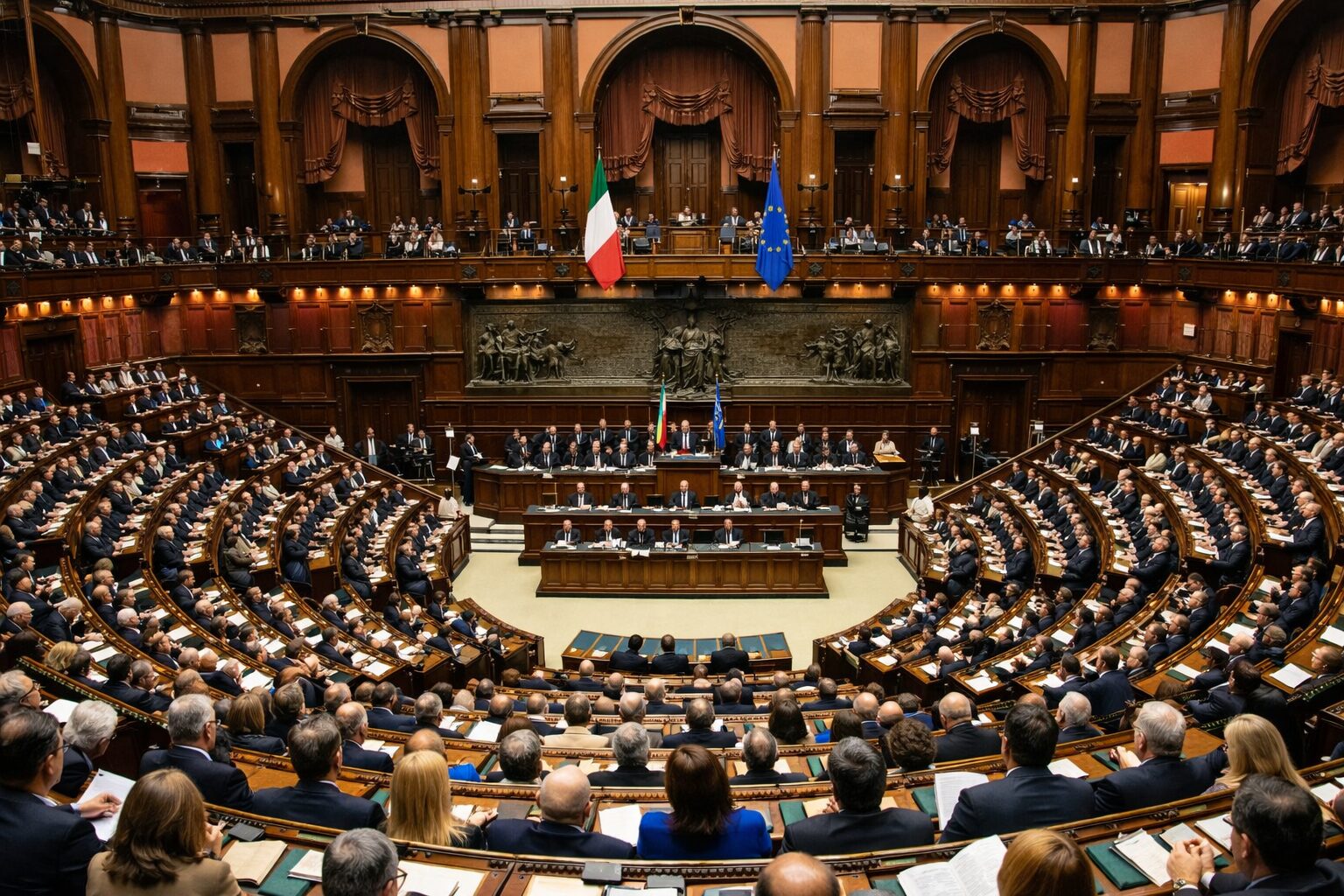
On 16 July 2026 the Chamber of Deputies approved on first reading, by secret ballot, the new electoral law nicknamed "Stabilicum" (217 in favour, 152 against, 2 abstentions). It is not yet law: it now goes to the Senate, where it will almost certainly be amended. In brief it works like this: a proportional system with a majority bonus (70 seats in the Chamber, 35 in the Senate) for the list or coalition that comes first in both houses while passing 42% of the vote; closed lists, no preference votes, no single-member constituencies, no run-off.
The concerns are serious and come from the constitutional-law experts heard by Parliament itself. Closed lists with no preference vote hand parties the choice of who gets elected, pushing citizen and representative even further apart: tellingly, the political flashpoint of the month was the defeat, by a single vote (187–188), of the amendment that would have restored preferences, sunk by around thirty snipers within the governing majority (a press estimate that cannot be verified, given the secret ballot). Then there is the "fixed-size" bonus, which can over- or under-represent unreasonably, and tying it to the national result in the Senate too raises doubts under Article 57 of the Constitution, which requires the Senate to be elected on a regional basis. The Court has already struck down similar mechanisms in rulings 1/2014 (the "Porcellum") and 35/2017 (the "Italicum"): several jurists foresee a pre-emptive challenge, and a law that decides how we vote, born split and with constitutional doubts already on the table, starts in the worst possible way.
4. The "save-Roggero" clause that does not save Roggero: a contradiction in terms

On 14 July 2026 the Council of Ministers approved the new Security bill. Among its novelties, an article amending the Civil Code to deny compensation for injury to anyone hurt while committing serious crimes — robbery, home burglary, sexual violence, kidnapping — with the exclusion extended to family members and applying even to cases of negligent excess of self-defence. The clause was born on the emotional wave of the case of Mario Roggero, the jeweller from Grinzane Cavour convicted with a final judgment (14 years and 9 months) for killing two robbers in 2021, facing compensation claims of about €3.3 million from the victims' families.
And here lies the plain contradiction: the "save-Roggero" clause does not save Roggero. It is not retroactive and would not apply to his case anyway, because he was convicted of voluntary homicide, not of negligent excess of self-defence: a law effectively named after a symbolic case that leaves that very case untouched is — quite apart from its merits — a short-circuit. On the substance, doubts remain: civil liability in Italy has a reparatory function, looking at the unjust harm suffered, not at the moral character of the person who suffers it; denying compensation by law on the basis of who the victim is — rather than what happened — raises a compatibility problem with the equality principle of Article 3 of the Constitution. This too, like the others, is for now only a bill: it must pass both houses before having any effect.
In conclusion
Four measures, one common thread: all but autonomy are still proposals, not laws in force, and each carries unresolved doubts of constitutionality or sustainability. They are worth following step by step — always distinguishing the announcement from the rule, and the rule from its real effects.
Sources
INPS — "Welfare workshop" (officina del welfare) and sustainability
- INPS — 25th Annual Report, President's Address (Gabriele Fava) (9 July 2026, PDF): https://www.inps.it/content/dam/inps-site/pdf/dati-analisi-bilanci/rapporti-annuali/xxv-rapporto-annuale/RELAZIONE_DEL_PRESIDENTE_2026.pdf
- ANSA — Fava: INPS from benefits-paying body to "welfare workshop" (9 July 2026): https://www.ansa.it/ansacom/notizie/economia/inps/2026/07/09/fava-inps-da-ente-erogatore-a-officina-del-welfare_bf8cb93e-80b9-44a0-accb-6084c675c62d.html
- Secondo Welfare — INPS working to become a "welfare workshop" (2026): https://www.secondowelfare.it/primo-welfare/inps-al-lavoro-per-diventare-unofficina-del-welfare/
- QuiFinanza — Pensions, €371bn spending: what tomorrow's retirees risk (INPS Report 2026): https://quifinanza.it/pensioni/pensioni-spesa-371-miliardi-rapporto-inps-2026/1007620/
- Itinerari Previdenziali — Pensions and assistance: a scale out of balance: https://www.itinerariprevidenziali.it/il-punto/previdenza-e-assistenza-disequilibrio/
- ANSA — INPS CIV: pension spending stable, assistance rising (16 December 2024): https://www.ansa.it/sito/notizie/economia/pmi/2024/12/16/civ-inps-spesa-previdenziale-stabile-cresce-assistenza_c24d4ae7-d2bd-445e-82be-030d77e23c38.html
- FP CGIL — INPS, reorganisation: what's cooking (14 May 2026): https://www.fpcgil.it/2026/05/14/inps-riorganizzazione-cosa-bolle-in-pentola/
Differentiated autonomy (Law 86/2024)
- Chamber of Deputies — The Regions and differentiated autonomy (19th-legislature dossier): https://temi.camera.it/leg19/provvedimento/19_tl18_regioni_e_finanza_regionale.html
- Presidency of the Council of Ministers — Differentiated autonomy (official page): https://www.programmagoverno.gov.it/it/approfondimenti/riforme-di-rilievo-del-governo/riforme-di-rilievo-del-governo/riforme-costituzionali/autonomia-differenziata/
- Dirittifondamentali.it — Constitutional Court, ruling no. 192/2024 on Law 86/2024 (December 2024): https://dirittifondamentali.it/2024/12/20/legge-sullautonomia-differenziata-delle-regioni-ordinarie-n-86-del-2024-la-corte-costituzionale-nel-ritenere-inammissibili-le-questioni-di-illegittimita-costituzionale-relative-all/
- CGIL — Note on the Constitutional Court's ruling on Law 86/2024 (2024): https://www.cgil.it/ci-occupiamo-di/riforme-istituzionali/nota-sulla-sentenza-della-corte-costituzionale-in-merito-alla-legge-n-86-2024-di-attuazione-dellautonomia-differenziata-megkk76e
- Sky TG24 — Differentiated autonomy: Senate approves pre-agreements (16 July 2026): https://tg24.sky.it/politica/2026/07/16/autonomia-differenziata-approvato-senato-protesta-opposizioni
- Il Sole 24 Ore — Differentiated autonomy: what the law provides, from LEP to timelines: https://en.ilsole24ore.com/art/from-lep-implementation-times-whats-in-the-ddl-on-differentiated-autonomy-AG0o87c
Electoral law "Stabilicum" (AC 2822)
- ANSA — Chamber passes electoral law with 217 in favour, on to the Senate (16 July 2026): https://www.ansa.it/sito/notizie/politica/2026/07/16/legge-elettorale-la-camera-verso-il-voto-finale_71b15c5c-c928-4550-8305-b137147950ef.html
- Pagella Politica — The Chamber has approved the electoral-law reform (16 July 2026): https://pagellapolitica.it/articoli/camera-approvazione-riforma-legge-elettorale
- Il Tempo — Preference amendment defeated; hunt for the thirty-one snipers (15 July 2026): https://www.iltempo.it/attualita/2026/07/15/news/legge-elettorale-bocciato-l-emendamento-sulle-preferenze-e-caccia-ai-trentuno-franchi-tiratori-48553322/
- Adnkronos — Snipers defeat the government on preferences; Meloni's anger (15 July 2026): https://www.adnkronos.com/politica/legge-elettorale-alla-camera-preferenze-meloni-franchi-tiratori_1k6I94uh7hxiegJ3NS1lFo
- Il Gazzettino — The electoral-law text: the "bonus" triggers at 42% (2026): https://www.ilgazzettino.it/italia/politica/legge_elettorale_testo_premio-9559754.html
- Euroconsumatori — The 2026 electoral law explained simply: what the Stabilicum provides (2026): https://www.euroconsumatori.eu/articolo/2985-nuova-legge-elettorale-spiegata-facile-cosa-prevede-stabilicum
Security bill — "self-defence" / "save-Roggero" clause
- QuiFinanza — The new security bill: what changes, from nightlife stops to self-defence (July 2026): https://quifinanza.it/politica/ddl-sicurezza-2026-baby-gang-legittima-difesa/1008354/
- ItaliaOggi — No compensation for injured robbers: the new rules (July 2026): https://www.italiaoggi.it/diritto-e-fisco/ddl-sicurezza-stop-ai-risarcimenti-per-i-rapinatori-feriti-le-nuove-regole-su-movida-minori-armati-e-seconde-case-bftsoqwg
- Il Foglio — The "save-Roggero" clause does not save Roggero (15 July 2026): https://www.ilfoglio.it/giustizia/2026/07/15/news/la-norma-salva-roggero-non-salva-roggero--402207
- Il Fatto Quotidiano — The Roggero case: why the new "self-defence" clause does not apply to him (18 July 2026): https://www.ilfattoquotidiano.it/2026/07/18/caso-roggero-i-risarcimenti-ai-familiari-dei-rapinatori-e-il-rischio-pignoramenti-perche-la-nuova-norma-salva-difesa-non-lo-riguarda/8452469/
- Sky TG24 — Meloni: "Those who commit crimes cannot be compensated" (17 July 2026): https://tg24.sky.it/politica/2026/07/17/ddl-sicurezza-2026-meloni
- Il Corriere della Nazione — The government rules out civil compensation for attackers (17 July 2026): https://ilcorrieredellanazione.wordpress.com/2026/07/17/nuove-norme-sui-reati-nel-ddl-sicurezza-il-governo-esclude-i-risarcimenti-civili-per-gli-aggressori/
Primary sources: Chamber of Deputies (camera.it), Senate (senato.it), Official Gazette (gazzettaufficiale.it), Constitutional Court (cortecostituzionale.it) for the texts of AC 2822, Law 86/2024 and rulings 192/2024 and 10/2025.